
Steam silencers
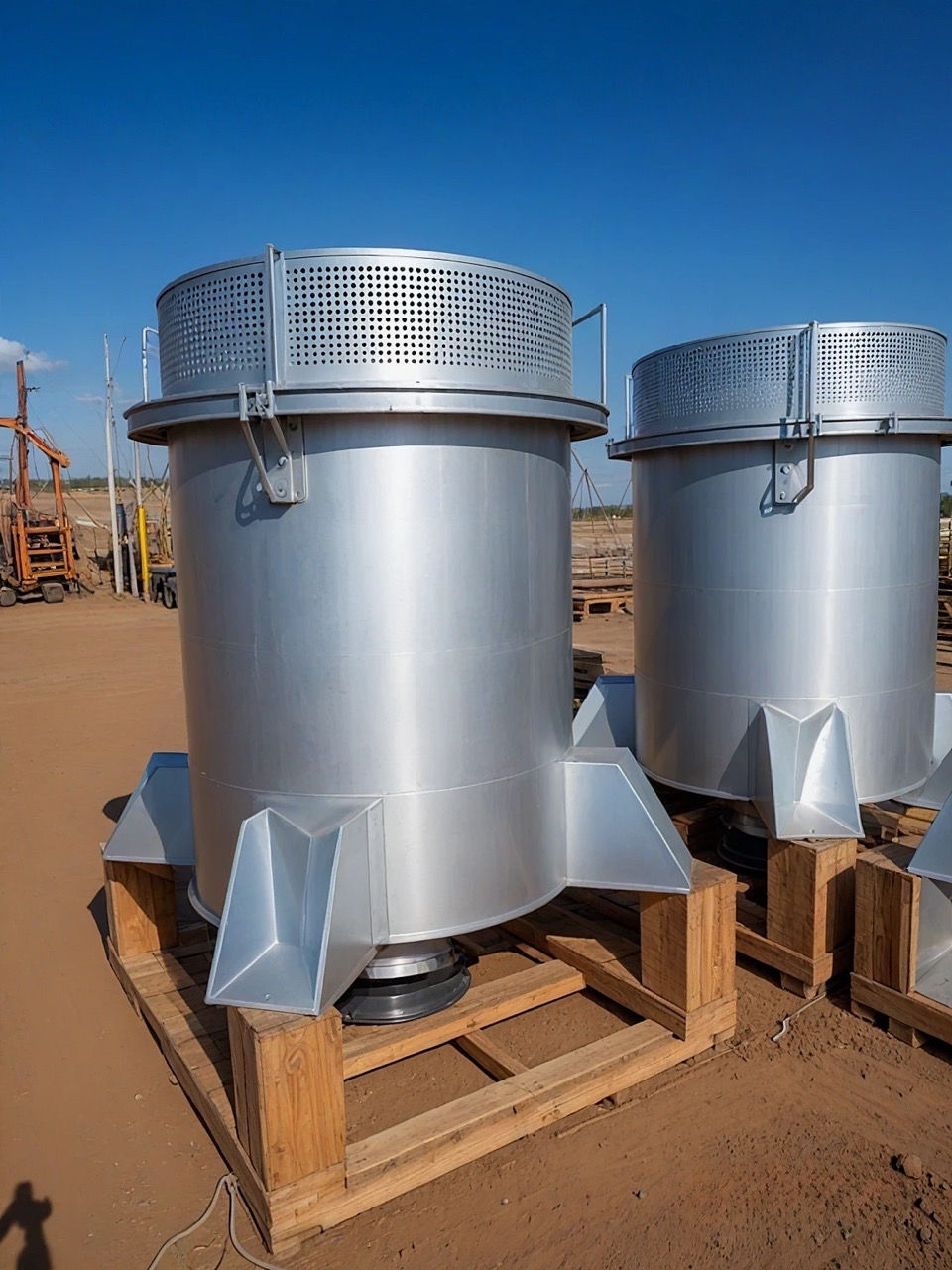
Steam silencers (also known as steam vent silencers) are used at facilities in the thermal power industry, metallurgy, chemical and petrochemical industries, as well as other sectors, during start-ups, shutdowns, emergency or process-related releases of steam and gases. They are designed to reduce sound pressure levels at permanent workplaces, in production work areas, and in territories adjacent to residential developments to values compliant with sanitary noise regulations.
-
Medium: water steam, air, and other gaseous media
-
Operating temperature: up to 650 °C
-
Operating pressure: up to 27 MPa
-
Installation location: pipelines downstream of safety valves, steam superheater blowdown pipelines, SNORT valves, and others
-
Design orientation: vertical / horizontal
-
Throttling block design: fixed / movable (to compensate for thermal expansion)
-
Material options: steel 09G2S (St3 / St20) / 12Kh18N10T / 12Kh1MF and other equivalents
-
Connection type: welded / flanged / pipe-in-pipe
-
Discharge direction: lateral / vertically upward
Download the questionnaire


Дроссельный блок
The most powerful source of noise impact on the environment is the release of steam into the atmosphere. Steam releases to the atmosphere occur during boiler start-up and shutdown operations and, in many cases, are a mandatory part of the process when a sharp increase in steam pressure above permissible limits occurs.
The noise generated by steam discharges into the atmosphere is associated with the noise produced by underexpanded steam jets formed at the outlet of exhaust pipelines during atmospheric release. A steam jet exiting an exhaust pipeline under excess pressure begins to expand and overexpand, resulting in an increase in steam velocity to supersonic levels. The overall sound power level of such jets exceeds 170 dB. Exceedances of permissible noise limits during steam discharges at power plants are recorded within a radius of several kilometers.
To reduce noise from steam discharges into the atmosphere, steam vent silencers are used. Steam silencers for exhaust pipelines must ensure a smooth reduction of the pressure and velocity of the discharged steam, as well as reduce the noise generated in the high-velocity zone at the silencer inlet.
Steam silencers incorporate several stages of sound attenuation:
-
First stage (throttling block): This stage is designed for smooth throttling, reduction of velocity, and expansion of the steam flow. The first stage includes a series of perforated shells spaced apart from each other, with different flow areas that increase toward the steam outlet. Due to properly selected flow cross-sections, a reduction in the total generated noise is achieved.
-
Second stage (dissipative section): This stage is intended to reduce noise to the required level. It consists of several lined channels (cassettes) fixed to each other at a specified distance using metal plates. Inside the cassettes there is a special non-hygroscopic sound-absorbing material wrapped in fiberglass cloth to prevent blow-out. Under certain operating parameters, a steam vent silencer may consist of only one stage.
-
A protective cap is installed at the silencer outlet to prevent atmospheric precipitation from entering the silencer.
-
A drain nozzle for condensate removal is provided at the bottom of the steam silencer.
-
For regions with low ambient temperatures, the condensate drain area is equipped (if required) with a heating device to prevent condensate freezing.
Installation of steam vent silencers makes it possible to reduce the sound pressure level to 80 dB(A) at a distance of 1 meter from the silencer and to 45 dB(A) in areas adjacent to residential buildings.